
 See My Latest Article on HelloNation
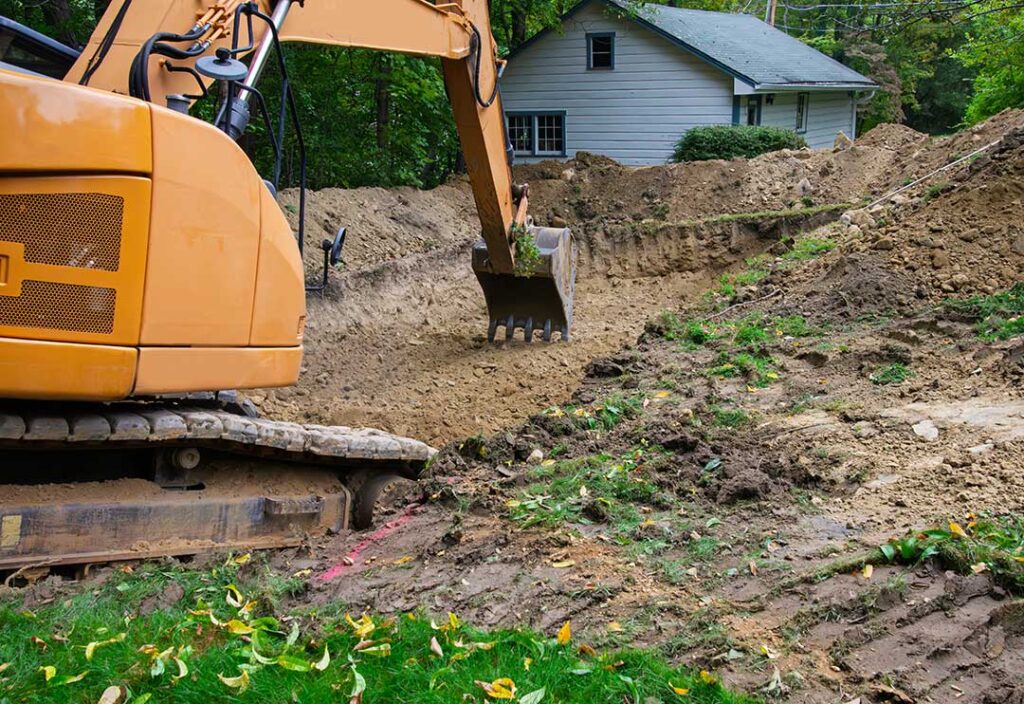
Before excavation begins, the yard should be cleared, underground utilities located, access planned, and drainage concerns identified. Good preparation reduces the risk of damaged lines, stuck equipment, soil instability, and avoidable repairs.
What should be done before any digging starts?
The first step is to define exactly where and how deep the excavation will be. A small trench for drainage, a foundation excavation, septic work, grading, and tree removal can each affect different parts of a property.
Mark the proposed work area with temporary paint, flags, or stakes. Include the full path of the excavation rather than marking only the starting and ending points. If soil will be piled nearby, mark space for that material as well.
Before work begins, document the existing condition of the yard. Take photographs of:
- Driveways, walkways, patios, steps, and retaining walls
- Fences, sheds, landscaping, and garden beds
- Exterior walls, foundations, and visible drainage features
- Utility meters, cleanouts, hydrants, and access covers
These records help distinguish pre-existing conditions from changes caused by excavation, especially when heavy equipment will cross paved or landscaped areas.
How are underground utilities located?
New York property owners should contact 811 before digging. The request should be made several working days before excavation, within the applicable timing window, and the marked utilities should be confirmed before work starts.
Utility markings commonly identify electric, gas, water, sewer, communications, and other underground facilities. The marks show approximate routes, not necessarily the exact depth or horizontal location of a line.
A common misconception is that a line is safe to cross simply because it is marked several feet away. Markings can be affected by surface conditions, older records, irregular service connections, or lines that do not run in a straight path. Excavation near a marked utility requires extra care and may require cautious hand exposure to verify the line’s actual location.
Private features may not be included in a standard utility locate. Examples can include:
- Underground lighting and irrigation
- Private electric lines to detached structures
- Buried drainage pipes
- Older fuel lines
- Invisible pet fences
- Private septic components
- Water lines installed by a previous owner
Property records, old survey drawings, and previous project information can help identify these features. If an unmarked line is uncovered, digging should stop until its purpose and ownership are understood.
Does Concord require permits for excavation?
Permit requirements depend on the purpose, location, and effect of the work. Excavation connected with a foundation, addition, retaining structure, drainage alteration, septic system, accessory structure, or other regulated improvement may require approval before soil is disturbed.
In Concord, the building and code enforcement office is the appropriate place to verify whether a permit, inspection, zoning review, or other authorization applies. Requirements may differ for work near property lines, public rights-of-way, wetlands, flood-prone areas, driveways, and existing structures.
A permit is not automatically unnecessary simply because the work is on private property. The depth of the excavation, the structure it supports, and the potential effect on neighboring land can all matter.
How should the yard be cleared?
Remove movable objects from the work zone and from the planned equipment path. This includes children’s toys, hoses, outdoor furniture, decorations, firewood, portable sheds, lawn equipment, and loose construction materials.
Prune or protect branches that could interfere with equipment. Identify trees that should remain and mark them clearly. Excavation can damage roots even when the trunk is outside the digging area, particularly when trenches pass beneath a tree’s canopy.
Protect features that cannot be moved. Temporary barriers may be needed around:
- Wells and septic covers
- Drainage inlets and cleanouts
- Utility meters
- Young trees and planted beds
- Low walls and fence sections
- Areas used by pedestrians or pets
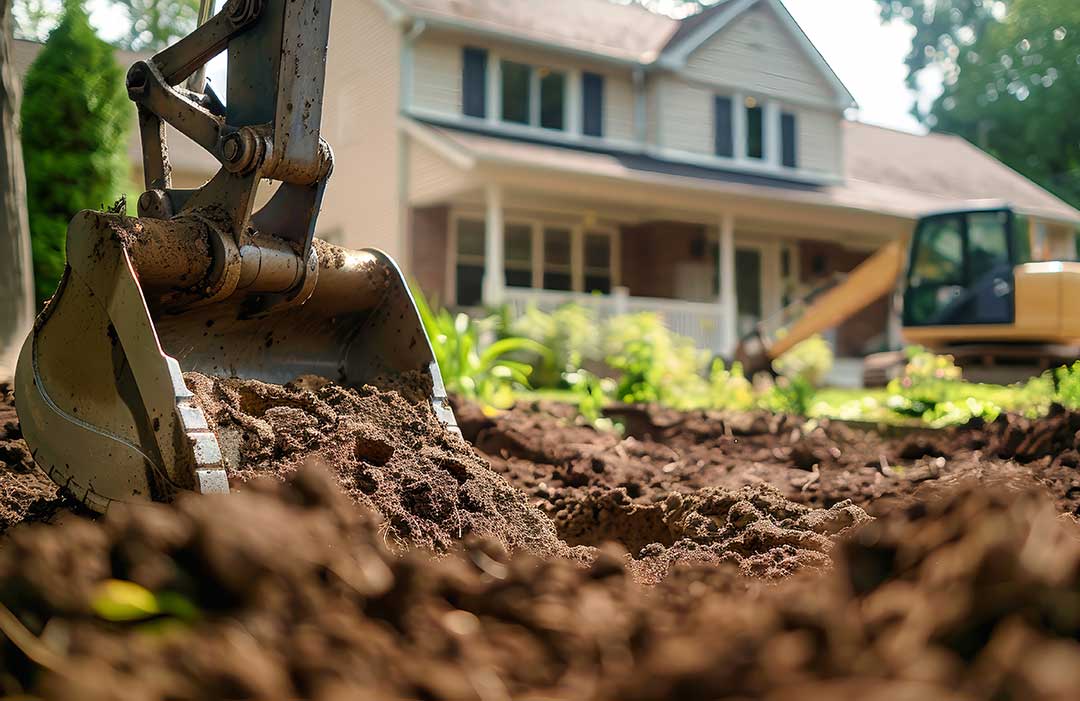
Pets and children should be kept away from the work zone. An open trench, unstable soil pile, or parked machine can remain hazardous even when equipment is not operating.
What should be considered about access for equipment?
Excavation equipment needs more room than the trench itself. Plan the route from the street or driveway to the work area, allowing space for turning, stabilizing, loading, and removing soil.
Measure gates, narrow passages, bridges, culverts, and overhead clearances. A machine may fit through a gate but still be unable to turn safely once inside the yard. Soft ground can also become impassable after rain.
In many parts of Concord, spring thaw, heavy rainfall, and freeze-thaw cycles can leave lawns saturated or uneven. Driving heavy equipment across wet soil can create deep ruts and compact the ground. Temporary ground protection may be appropriate where access crosses a lawn, drainage swale, or landscaped area.
Keep vehicles and equipment away from unsupported trench edges. The weight of machines, soil piles, building materials, and even nearby structures can add pressure to excavation walls.
How do weather and soil conditions affect preparation?
Wet or frozen ground changes how excavation behaves. Saturated soil may slump, rut, or spread farther than expected. Frozen ground can be difficult to remove and may thaw unevenly afterward. Snow can hide grade changes, drainage paths, surface damage, and utility markings.
Before excavation, identify where rainwater naturally flows across the property. A new trench or soil pile can redirect runoff toward a foundation, driveway, neighboring yard, or septic area.
Keep excavated soil far enough from the edge of a trench that it cannot slide back in. The required distance depends on the soil, excavation depth, protective system, and site conditions. Deep or confined excavations should not be entered without appropriate protective measures and competent safety oversight.
What should be planned for soil, trees, and landscaping?
Decide in advance whether excavated soil will remain on the property or be removed. Different layers of soil may need to be kept separate. Topsoil, subsoil, clay, gravel, and fill do not perform the same way when used for backfilling or grading.
Protect topsoil if it will be reused for lawns or planting beds. Avoid mixing it with rocks, construction debris, or wet clay. If soil is placed temporarily on the property, keep it clear of drainage features and avoid blocking access to utility covers.
Landscaping near the excavation may be damaged by vibration, falling soil, dust, or equipment movement. Mark irrigation zones and identify valuable plants before work begins. Roots cut during excavation can affect tree stability long after the project is finished.
What should be checked after the excavation is complete?
The yard should be inspected before backfilling is finished. Confirm that drainage pipes, foundation forms, utility connections, and other buried components are located correctly and protected as required.
After backfilling, soil may settle, especially after rain and seasonal freezing. Low areas can collect water, and poorly compacted material can cause sinking beneath walkways or driveways. Final grading should direct water away from buildings without sending runoff toward neighboring properties.
Replace disturbed topsoil only after the underlying fill has been properly placed and compacted. Keep photographs, permits, utility markings, material information, and inspection records with the property documents. These details can be useful during future repairs, landscaping, or construction.
IMAGE_ALT:
Marked excavation area beside a house with utility flags, cleared lawn, and protected landscaping.