
 See My Latest Article on HelloNation
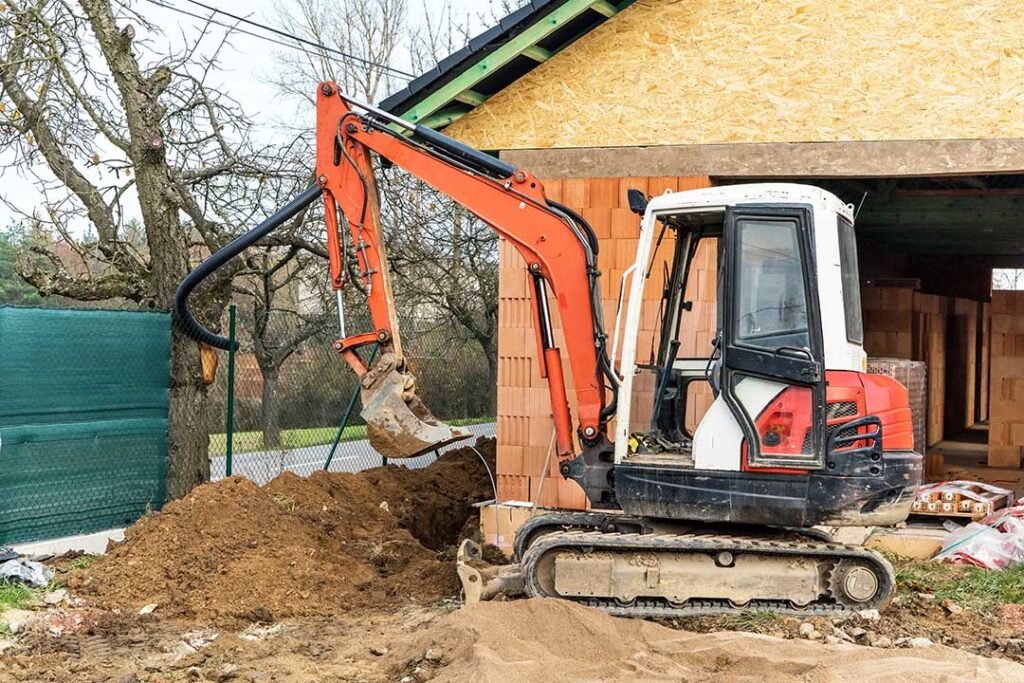
Excavation is the controlled removal, movement, and shaping of soil, rock, and other ground materials to prepare a site for construction. It may be needed for a building foundation, driveway, drainage system, utility line, septic feature, retaining wall, or landscape improvement.
Although excavation often happens before visible construction begins, it strongly affects the safety, durability, drainage, and long-term performance of the finished project. Poorly planned earthwork can lead to settlement, water problems, foundation movement, damaged utilities, or unstable slopes.
What does excavation include?
Excavation is more than digging a hole. It usually involves several related activities:
- Removing topsoil, vegetation, debris, or unsuitable soil
- Digging to a planned depth and shape
- Moving soil to another part of the property or removing it from the site
- Preparing a level or sloped surface
- Creating trenches for utilities, drainage, or footings
- Compacting soil so it can support construction
- Installing gravel, drainage stone, or other base materials
- Stabilizing slopes and protecting exposed soil from erosion
The work may be performed with hand tools for a small project or with equipment such as excavators, loaders, trenchers, and grading machinery for larger sites.
The correct method depends on the project size, soil conditions, available workspace, depth of the excavation, nearby structures, and the amount of water moving through the ground.
Why is excavation important in construction?
Excavation creates the physical conditions needed for construction to begin safely. A structure cannot perform properly if it is built on unstable, poorly drained, or incorrectly prepared ground.
For example, a foundation excavation must reach the planned depth and provide a firm, reasonably uniform base. If some portions rest on compact soil while others rest on loose fill, the building may settle unevenly. Uneven settlement can contribute to cracks in foundation walls, floors, masonry, or interior finishes.
Excavation also establishes the elevations that control how water flows across a property. A few inches of difference can determine whether rainwater moves away from a structure or collects beside it. In a region with wet springs, freezing temperatures, and repeated freeze-thaw cycles, drainage and soil preparation deserve careful attention.
What types of excavation are common?
Different construction tasks require different forms of excavation.
Foundation excavation
Foundation excavation removes soil for basement walls, crawl spaces, slabs, footings, and other structural elements. The depth depends on the design, soil conditions, frost protection needs, and local requirements.
A basement excavation is substantially different from a shallow footing excavation. Deeper cuts require more attention to sidewall stability, access, groundwater, and the effect on nearby structures.
Trenching
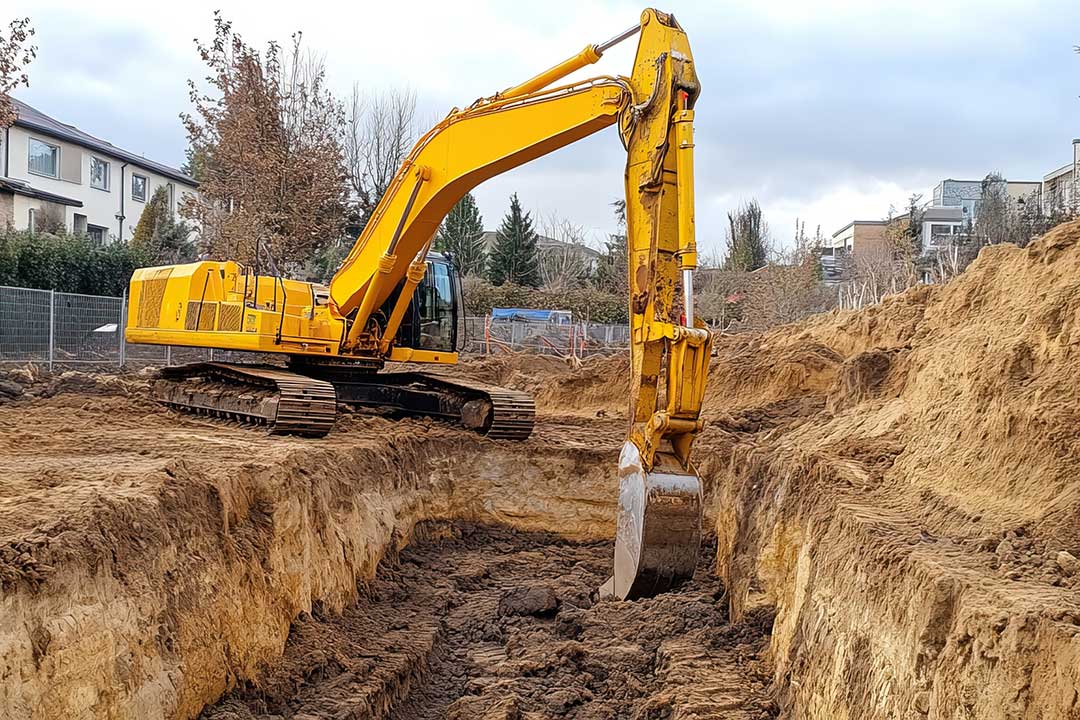
Trenching creates narrow, elongated excavations for water lines, electrical conduits, drainage pipes, sewer connections, and other utilities. Trenches must be properly located, deep enough for the planned installation, and stable enough for anyone who must enter them.
A trench can become hazardous quickly if its sides collapse or if water accumulates inside. Safe access, protective systems, and careful observation of changing soil conditions are essential for deeper work.
Grading and site preparation
Grading shapes the ground to establish building pads, driveways, walkways, lawns, swales, and drainage routes. It may involve cutting down high areas, filling low areas, or creating a gentle slope away from structures.
Grading is not simply a cosmetic step. It influences surface runoff, erosion, accessibility, snowmelt, and the amount of water that reaches foundations.
Drainage excavation
Drainage work may require trenches for solid or perforated pipes, dry wells, swales, catch basins, or other systems. The excavation must account for the direction of flow, pipe slope, soil permeability, and the location of structures and utilities.
A drainage feature that is too shallow, incorrectly sloped, or placed in unsuitable soil may not function as intended.
Landscape and property improvements
Excavation is also used for patios, retaining walls, ponds, gardens, tree planting, and outdoor structures. Even smaller projects can affect drainage and soil stability, especially when a slope is cut or soil is placed near a property boundary.
How do soil and weather affect excavation?
Ground conditions can change significantly from one property to another. Soil may include clay, sand, gravel, silt, fill, weathered rock, or a mixture of several materials. Each behaves differently when wet, dry, compacted, or exposed.
Clay-heavy soil can hold water and become difficult to work when saturated. Sandy soil may drain quickly but can shift or cave into an open trench. Fill soil may contain mixed materials and may not provide consistent support unless evaluated and compacted properly.
Weather also affects scheduling and safety. Heavy rain can soften excavation walls, flood low areas, and make equipment movement difficult. Frozen ground can be hard to remove but may lose strength as it thaws. Spring conditions may expose drainage issues that are less visible during dry periods.
For this reason, excavation plans often need to account for temporary water control, stockpile locations, access routes, and soil protection during periods of rain or freezing temperatures.
What should happen before digging?
Before excavation begins, the proposed work area should be reviewed for underground and surface hazards. Utility lines may be located beneath lawns, driveways, roads, and older additions. Private lines serving features such as outbuildings, wells, irrigation systems, or exterior lighting may not be identified in the same way as public utilities.
The planned excavation should also consider:
- Property boundaries and easements
- Existing foundations, retaining walls, and pavement
- Overhead wires and equipment clearance
- Surface drainage patterns
- Trees and root zones
- Septic features, wells, and private utility lines
- Soil stockpile locations
- Equipment access and emergency exit routes
Utility-locating procedures should be completed before breaking ground, and markings should be treated carefully because they indicate approximate locations rather than a guarantee that every line is exposed.
What is the difference between excavation and grading?
Excavation generally refers to removing or relocating earth to create space or reach a planned depth. Grading refers to shaping the ground surface to establish elevations and slopes.
The two activities often overlap. A project may first excavate for a foundation, then use grading to direct runoff around the completed structure. Soil removed from one area may also be placed elsewhere, but fill should be suitable for its intended use and compacted in controlled layers.
Simply spreading excavated soil over a low area does not guarantee a stable building pad, driveway, or lawn. Loose or wet material may settle later, producing depressions and drainage problems.
What are common excavation mistakes?
Several problems appear repeatedly in residential and small construction projects:
- Digging before underground utilities are identified
- Building on loose, organic, wet, or uncontrolled fill
- Leaving foundation soil exposed to prolonged rain or freezing
- Placing soil stockpiles too close to an excavation edge
- Ignoring water flowing into a trench or foundation pit
- Creating slopes that are too steep for the soil conditions
- Failing to compact fill in suitable layers
- Changing finished grades without considering neighboring drainage
- Assuming a shallow project has no safety risks
A project can look level and complete while still having hidden soil or drainage defects. Proper measurements, observation, and sequencing help reduce those risks.
When is professional oversight necessary?
Excavation may be suitable for limited homeowner projects, such as carefully planned shallow garden work. Greater caution is needed for deep trenches, foundation work, work near buildings, unstable slopes, utility areas, retaining structures, or locations with significant water.
Professional oversight may be necessary when safety, structural support, legal requirements, or utility protection is involved. Excavation is not a task where appearance alone confirms that the work is sound. The most important results—stable soil, correct elevation, proper drainage, and safe ground conditions—are often beneath the finished surface.